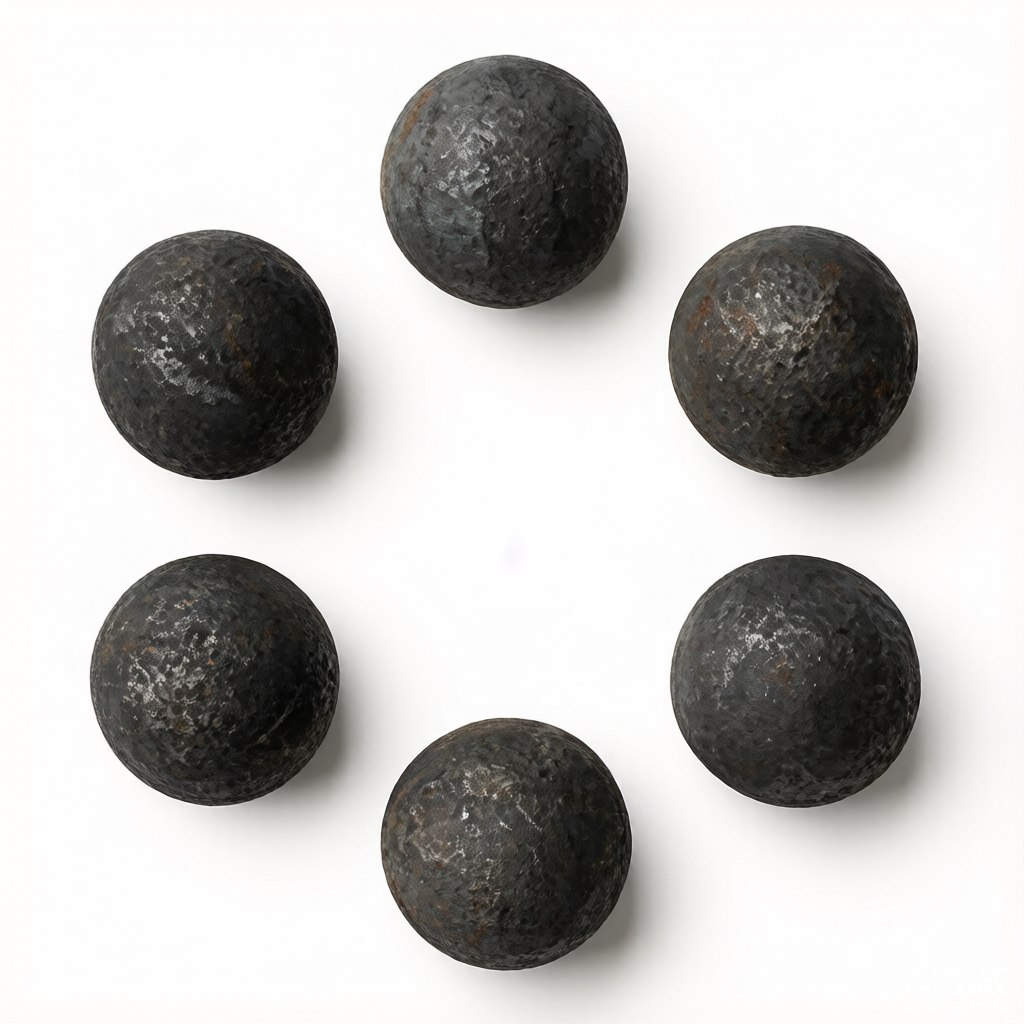
Cast steel balls
Reference Price
$0.00
Cast iron balls can be divided into three categories: high-chrome balls, medium-chrome balls, and low-chrome balls.
1. Quality Indicators
of High-Chromium Balls: The chromium content of high-chromium balls is greater than or equal to 10.0%. Carbon content ranges from 1.80% to 3.20%. According to national standards, the hardness of high-chromium balls must not be less than 58 HRC, and the impact value should be greater than or equal to 3.0 j/cm². To achieve this hardness, chromium balls must undergo high-temperature quenching and tempering. Currently, there are two domestic methods for high-chromium ball quenching: oil quenching and air-powered quenching. If the high chrome ball hardness is below 54 HRC, it means it has not been quenched.
2. Quality indicators
for medium chromium balls: chromium balls specify a chromium content range from 3.0% to 7.0%, and carbon content between 1.80% and 3.20%. Its impact value should not be less than 2.0 j/cm². According to national standards, the hardness of chrome balls should be greater than or equal to 47 HRC. To ensure quality, medium chromium balls should undergo high-temperature tempering to eliminate casting stress.
If the surface of the iron ball appears black or red, it means it has undergone high-temperature tempering. If the surface of the iron ball still has a metallic color, we can determine that it has not undergone high-temperature tempering.
3. Quality indicators
of low-chromium balls: Generally, low-chromium balls contain 0.5% to 2.5% chromium, and carbon content ranges from 1.80% to 3.20%. Therefore, according to national standards, the hardness of low-chromium balls should not be less than 45 HRC, and the impact value should not be less than 1.5 J/cm². Low chromium balls also require high-temperature tempering to ensure quality. This treatment can eliminate casting stress. If the surface of the iron ball is deep red, it indicates it has undergone high-temperature tempering. If the surface still shows a metallic color, it indicates that the iron ball has not undergone high-temperature tempering.
Cast iron balls are typically used for large-scale mining in various cement plants, chemical plants, power plants, quartz sand plants, silica sand plants, and so on.
Customer Reviews
No reviews yet. Be the first to share your experience.
Please sign in to write a review.